The fastest reliable way to create flashcards from web content is a browser-integrated capture tool, one that reads the page as rendered, highlights or screenshots what you need, and hands it to an AI generator on the spot. AI can build a deck in seconds instead of hours, but every generated card still needs a quick human edit pass before it’s fit to study. WordByWord builds this exact workflow into the browsing you’re already doing.
TL;DR:
- Using a browser extension for capturing web content ensures accurate extraction of dynamically loaded, paywalled, or logged-in pages compared to URL converters.
- AI-generated flashcards speed up creation but require careful editing to focus on one idea per card and avoid overly long definitions for effective review.
- Export formats like Anki (.apkg) are best for long-term review, while CSV or Markdown suit quick access and note integration; check formatting before exporting.
- Capture from long, dense sources section-by-section rather than as a whole to maintain manageable card counts suitable for review sessions.
- Prioritize tools that facilitate easy editing and pruning to maximize retention, as quick generation without refinement leads to less effective study material.
Table of Contents
- How Do You Create Flashcards From Web Pages, PDFs, and Slides?
- How to Build Your First Deck From a Webpage or PDF
- What Makes an AI-Generated Flashcard Actually Good?
- Which Export Format Should You Use: Anki, CSV, or Markdown?
- Is It Safe to Capture Text From Paywalled or Logged-In Pages?
- Why WordByWord Fits This Exact Workflow
- Comparison of Popular Flashcard Creation Tools: Pros and Cons
- What Do Free Plans Actually Limit, and When Is Upgrading Worth It?
- How Do You Pick Source Content That Actually Makes Good Flashcards?
- Why Won’t My Flashcard Tool Extract Content Correctly?
- The Real Bottleneck Isn’t AI Speed, It’s Editing Discipline
- Get Started With WordByWord in Under Two Minutes
- Sources
How Do You Create Flashcards From Web Pages, PDFs, and Slides?
You have three real options, and picking the wrong one wastes time. A browser extension captures whatever is rendered on your screen, meaning it works on logged-in course portals, paywalled journal articles, and pages that load content dynamically. A file upload tool takes a PDF, DOCX, or PPTX and parses it directly, which suits lecture slides and scanned readings better than any copy-paste job. A URL converter just fetches a public link and extracts text, which is fine for a static blog post but breaks on anything requiring a login.
- Reading an article or textbook chapter? Use a browser extension so you can highlight exact phrases in context.
- Working from lecture slides or a syllabus PDF? Upload the file directly rather than screenshotting each slide.
- Studying from a YouTube lecture? Capture subtitles live, since URL converters generally can’t reach caption text at all.
Browser extensions tend to outperform URL-input converters precisely because they read the DOM after JavaScript has rendered it, not the raw HTML a server first sends.
How to Build Your First Deck From a Webpage or PDF
Here’s the actual sequence, start to finish, whether you’re working from a news article or a 40-slide lecture deck.
- Pick your workflow and open the source. Browser tab open for a webpage or YouTube video; file picker ready for a PDF or slide deck.
- Capture the material. Highlight text directly on the page, drag-select an image region for a diagram, or upload the document. Adobe’s flashcard maker accepts PDF, DOCX, PPTX, TXT, and XLSX files up to 100 MB each, which covers most course material without splitting files.
- Run AI generation and cap the output. Set a card limit before generating. Twelve well-made cards beat forty repetitive ones for a single article.
- Edit aggressively. Split any card testing two facts at once. Convert vocabulary-in-context to cloze deletion instead of a standalone definition.
- Tag and schedule, or export. Sort by topic or difficulty, queue the deck for spaced repetition, or export if you need it somewhere else.
Pro Tip: Generate first, edit second, never the reverse. Trying to write perfect cards during capture breaks your reading flow and slows you down more than a five-minute cleanup pass ever will.
Most extension-based tools support keyboard shortcuts for capture, letting you select text and fire off a card without touching the mouse. That small habit is what separates someone who builds 15 cards during one reading session from someone who gives up after three.
What Makes an AI-Generated Flashcard Actually Good?
Raw AI output is a starting point, not a finished deck. AI generation genuinely can turn a slow manual process into something that takes seconds instead of hours, but speed alone doesn’t guarantee a card worth reviewing three weeks from now.
- One idea per card. If a card asks two questions, split it. Compound cards fail during review because you can’t tell which half you got wrong.
- Skip long definitions. A definition you have to reread twice isn’t a flashcard, it’s a paragraph. Trim it to the phrase that actually matters.
- Prefer cloze deletion for vocabulary in context. Blanking out the target word inside the original sentence teaches usage, not just meaning.
- Add context or an image when the term is visual. A diagram label sticks better as an image-based card than as text alone.
- Delete anything you already know cold. Low-value cards dilute review sessions and waste review slots that should go to material you’re still shaky on.
A reasonable target is a moderate number of cards per source to keep a deck reviewable without turning study time into a slog, weighted toward whatever shows up repeatedly across your readings or lecture slides. That range keeps a deck reviewable without turning study time into a slog.
Which Export Format Should You Use: Anki, CSV, or Markdown?
Export when you need offline access, a custom review algorithm, or a permanent backup outside the tool you built the deck in. Study in-app when you just want to review today’s capture without extra steps.
- Anki (.apkg) preserves cloze deletions and scheduling data, making it the right call for anyone running a serious long-term review system.
- CSV is the safest bet for moving cards into a spreadsheet or a different flashcard app, since almost every tool can read it.
- Markdown works best for dropping cards straight into Notion or Obsidian alongside your other notes.
Before exporting, check that image fields map correctly and that cloze markers survive the format conversion. Common exports across extension-based tools include CSV, Markdown, and Anki packages, which covers most classroom and self-study setups. If you’re sharing a deck with classmates, export to a file and hand it off directly, or drop it into a shared study space so the group works from one source instead of five different versions.
Is It Safe to Capture Text From Paywalled or Logged-In Pages?
Browser extensions read the page exactly as your browser renders it, after login and after JavaScript runs, which is why they handle paywalled and dynamic content that a simple URL fetch can’t touch. That access comes with a responsibility to check how the tool actually handles what it reads.
Confirm whether processing happens locally or in the cloud, since privacy models vary meaningfully between products. Redact anything sensitive, like personal identifiers in a case study, before you capture it. On the accuracy side, double-check dates, statistics, and technical definitions AI tends to occasionally invent, especially in dense academic material.
Why WordByWord Fits This Exact Workflow
WordByWord runs this capture-to-review pipeline as its core function rather than a bolt-on feature. Its Chrome extension translates and captures words in one click across regular webpages, PDFs, and YouTube subtitles, so a lecture clip and a journal article feed the same collection.
Spotlight mode highlights vocabulary on the page itself, sorted by how well you already know each word, so you’re not wasting card slots on terms you’ve already mastered. Comprehension level shows what percentage of a given article, PDF, or video you already understand before you commit to reading it, which helps you pick source material that actually challenges you without drowning you.
Collections can be built by hand, generated by AI from a prompt, or imported via CSV from Anki or Quizlet if you’re migrating an existing deck. Review runs through seven training modes, including typing, listening, and a 60-second sprint, scheduled by spaced repetition. The free plan works indefinitely with usage limits; upgrading removes those caps entirely.
Comparison of Popular Flashcard Creation Tools: Pros and Cons
Flashcard tools generally fall into three categories, and each trades off speed against control differently.
Browser-integrated extensions capture text and images directly from the rendered page, work behind logins, and often include built-in AI generation. The tradeoff: you need the extension installed on every device you study from, and some only support Chrome-based browsers.
Document-upload converters handle PDFs and slide decks in bulk, which suits anyone digesting a semester’s worth of lecture material at once. They fall short when your source is a live webpage or a video, since there’s no file to feed them.
URL-based converters are the simplest to use, just paste a link, but they struggle badly with client-rendered content, meaning anything behind a login wall or loaded dynamically after the page opens often comes back blank or garbled.
| Tool type | Best for | Main limitation |
|---|---|---|
| Browser extension | Paywalled pages, YouTube subtitles, on-the-fly capture | Extension must be installed per device |
| Document upload | Bulk PDFs, slide decks, scanned readings | No live webpage or video support |
| URL converter | Quick capture from public static pages | Fails on dynamic or logged-in content |
For a student juggling readings, recorded lectures, and PDFs in the same week, a browser extension covers the widest range of sources without switching tools mid-session.
What Do Free Plans Actually Limit, and When Is Upgrading Worth It?
Every flashcard tool worth using offers a free tier, but the limits differ in ways that matter once you’re generating decks weekly instead of occasionally. Most free plans cap either the number of cards you can generate per month, the number of active collections you can keep, or the AI features available, things like advanced cloze generation or voiceover.
The pattern worth watching for: free tiers are usually generous enough for occasional studying, one deck before an exam, a handful of vocabulary lists, but they start pinching once you’re capturing daily from multiple sources. A single research paper can easily generate 25 cards, and a heavy reading week can blow past monthly caps fast.
Paid tiers typically remove card-count ceilings, unlock additional export formats, and add features like enhanced audio pronunciation or unlimited AI-generated collections. WordByWord follows this same structure: the free plan stays free indefinitely with usage limits, while Premium removes those caps and adds unlimited collections, AI-powered exercises, and enhanced voiceover.
Before paying for anything, run your actual study volume through a free plan for a week or two. If you’re hitting limits three or four times before a deadline, upgrading pays for itself in saved friction. If you’re generating one deck a month, the free tier probably covers you indefinitely.

How Do You Pick Source Content That Actually Makes Good Flashcards?
Not every webpage makes good flashcard material, and picking poorly is the single biggest reason decks end up cluttered with junk cards. Dense, fact-heavy sources, textbook chapters, primary research, well-structured reference articles, generate cleaner cards than opinion pieces or loosely structured blog posts.
Look for source material with clear definitions, named entities, and discrete facts rather than flowing narrative prose. A Wikipedia entry on a historical event generates better cards than a first-person essay about that same event, simply because the facts are already isolated into digestible chunks.
Length matters too. A 2,000 word article usually yields a manageable 15 to 20 solid cards; a 10,000 word document will flood you with far more raw material than you can usefully prune. When working from something long, consider capturing section by section rather than feeding the whole document into a generator at once, since that keeps card counts within the 8 to 30 range that’s actually reviewable.

Video subtitles deserve a mention here too, since lecture and tutorial videos convert into surprisingly effective vocabulary sources when the captions are accurate and the material is dense with terminology rather than casual conversation.
Why Won’t My Flashcard Tool Extract Content Correctly?
Extraction failures almost always trace back to one of a few predictable causes, and most have quick fixes.
Blank or garbled captures on a webpage usually mean the tool is trying to fetch a URL rather than reading the rendered page, which fails on sites that load content via JavaScript after the initial page load. Switching to a browser extension that reads the DOM directly solves this in most cases.
Missing text from a PDF often means the file is a scanned image rather than searchable text. Run it through OCR first, or capture the relevant sections as image-based cards instead of expecting text extraction to work.
Incomplete capture on paywalled sites happens when a tool tries to access the page from outside your logged-in session. Only extensions running inside your actual browser session, with your login intact, reliably get past this.
Cards that misrepresent numbers or technical terms point to an AI hallucination issue rather than a capture problem. Always cross-check dates, statistics, and specialized terminology against the original source before trusting a generated card.
Diagrams or charts that generate no cards at all usually mean the tool only processes text. If the source material is heavily visual, look for a tool that supports image-region capture so diagrams become their own card type instead of getting dropped entirely.
The Real Bottleneck Isn’t AI Speed, It’s Editing Discipline
Most advice on this topic treats AI generation as the hard part and editing as an afterthought. That’s backwards. Generating 30 cards from an article takes seconds; the actual skill that determines whether you remember any of it three weeks later is knowing which ten of those thirty are worth keeping.
The conventional wisdom oversells speed and undersells pruning. A deck of 30 mediocre AI cards teaches you less than a deck of 12 cards you personally tightened into cloze deletions and killed the redundant ones from. The hybrid approach, generate fast, then edit hard, isn’t a compromise. It’s the only version of this workflow that actually works for retention rather than just producing a large export file.
What we’d tell any student starting today: don’t chase the tool with the biggest card-count limit. Chase the one that makes editing frictionless, because that’s the step everyone skips, and it’s the step that decides whether any of this sticks. Real-content capture, from the pages and videos already part of your week, beats a pre-made generic deck almost every time, simply because you already have context for the material.
— WordByWord Team
Get Started With WordByWord in Under Two Minutes
WordByWord turns the browsing you’re already doing into flashcard material, no separate study session required. Install the Chrome extension, open any article, PDF, or YouTube video, and click a word to translate and save it. That single click builds your collection automatically while you read.
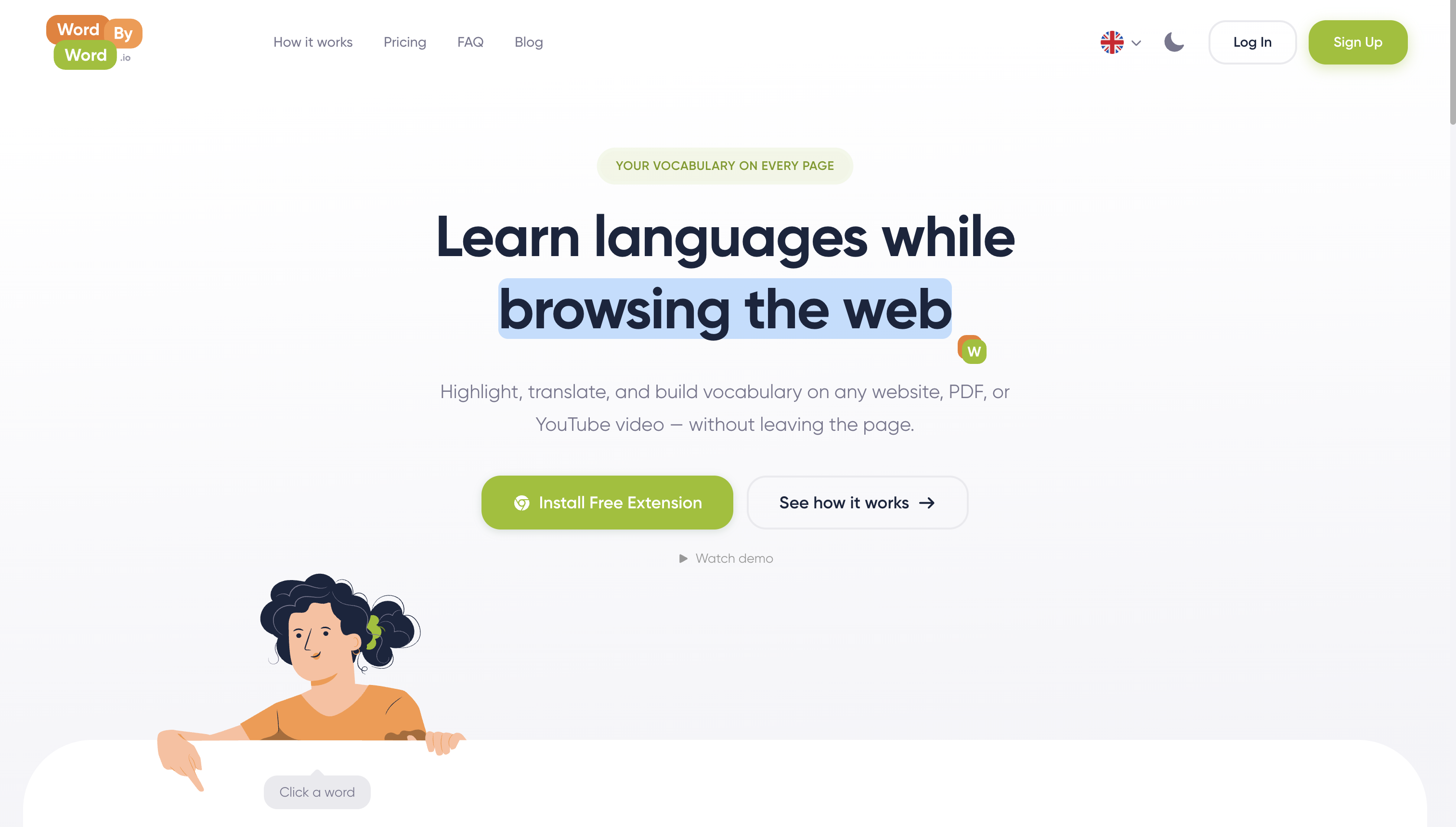
The free plan works indefinitely, letting you build collections, review with spaced repetition, and translate across more than 50 languages, all with standard usage limits. Upgrading to Premium removes those caps entirely and adds unlimited AI-generated collections, enhanced voiceover, and deeper personalization for learners studying multiple languages at once. If your current workflow involves copying text into a separate flashcard app, this cuts out that whole extra step. Head to WordByWord’s homepage to see the full feature set and start your first collection today.
Sources
For file-upload limits and supported formats, see Adobe’s flashcard maker documentation. For a breakdown of why browser capture beats URL converters on tricky pages, read CyberNews’s analysis of AI flashcard tools. For export and Anki-alternative workflows, see WordByWord’s guide to Anki alternatives.
- Free online flashcard maker – Create your own flashcards | Acrobat
- Best AI flashcard maker tools (analysis) | CyberNews