
TL;DR:
- Multilingual flashcards improve language learning by enabling cross-language connections and efficient review.
- AI-powered algorithms like FSRS schedule reviews 30% more effectively, allowing larger vocabulary growth.
Why multilingual flashcards outperform single-language study
Multilingual flashcards combine vocabulary from two or more languages inside a single review system, so you build word knowledge across languages without juggling separate apps or decks. The efficiency gain is real. Instead of treating each language as an isolated silo, your brain starts recognizing patterns across linguistic families, a skill researchers call metalinguistic awareness, which speeds up acquisition of every language you study afterward.
The core advantages over single-language cards:
- Unified review sessions cut total study overhead by letting one spaced repetition schedule govern all your languages
- Cross-language connections reinforce meaning: seeing the Spanish casa next to the French maison deepens both
- Multimedia support (native audio, images) strengthens pronunciation and visual memory simultaneously
- Progress visibility across languages in one dashboard prevents neglecting a weaker language for weeks
The scheduling engine underneath matters enormously. Advanced algorithms like FSRS schedule reviews about 30% more efficiently than the older SM-2 method, letting you review each word at the optimal moment before your memory fades. WordByWord builds on this principle, using AI to track vocabulary strength across 50+ languages and surface the right words at the right time while you browse.
Table of Contents
- Best practices for studying multiple languages with flashcards
- Common challenges in multilingual learning and how to solve them
- How AI tools make multilingual flashcard study more effective
- Practical steps to start using AI-enhanced language learning flashcards today
- WordByWord turns every website into a vocabulary lesson
- Key Takeaways
Best practices for studying multiple languages with flashcards
Getting the mechanics right separates learners who plateau from those who keep moving.
1. Set language-specific goals, not a single blended target. Decide what “progress” means for each language separately: reading a news article in French, ordering food in Japanese. Vague goals produce vague results.
2. Schedule daily review, not marathon sessions. Spaced repetition only works when reviews happen consistently. Fifteen focused minutes beats a two-hour weekend cram every time.
3. Pair languages strategically. Interference is highest between similar languages like Spanish and Italian. Pairing a Romance language with a non-related one, say French and Japanese, keeps vocabulary and grammar rules from bleeding into each other.

4. Add audio to every card. Native pronunciation audio attached to a flashcard activates a different memory pathway than text alone. Hearing the word while reading it creates a stronger, more durable trace.
5. Use images for concrete nouns. A photo of a dog on a card beats a translation every time for concrete vocabulary. Reserve text-only cards for abstract concepts and grammar patterns.
6. Track progress per language. Reviewing a combined score hides which language is falling behind. Keep separate metrics so you can adjust study time before a gap becomes a problem.
7. Adjust input proportions as you advance. Experts recommend a lead language receiving the majority of study time and a lag language receiving the remainder, then shifting study time as your weaker language catches up.
Pro Tip: Anthony Metivier, author of the Magnetic Memory Method, argues that practice rhythms and meta-skills matter more than raw hours. Build a system you can run daily without willpower, and the vocabulary accumulates on its own.
Common challenges in multilingual learning and how to solve them
Every learner who studies multiple languages hits the same walls. Knowing what they are in advance makes them far less disorienting.
Cognitive overload is the most common early problem. Your working memory has a real ceiling, and asking it to hold two new grammars simultaneously pushes against it fast. The fix is staggered starts: spend the first one to three months building a solid base in Language A before introducing Language B at all. Polyglot guides consistently recommend an 80/20 split in the first phase, then shifting to 50/50 once Language A feels stable.
Language interference shows up as mixing vocabulary mid-sentence or applying one language’s grammar rules to another. Clear contextual separation helps: study each language in a different physical space, at a different time of day, or linked to a different activity. Your brain uses environmental cues to activate the right language automatically.
Streak guilt derails more learners than difficulty does. Missing a day feels catastrophic when an app punishes you for it. Experts advise choosing systems that let you pause and resume without losing your vocabulary progress or resetting your review schedule. A missed day should cost you one day, not a week of catch-up.
Study time math is unforgiving. Cutting a 30-minute session in half to cover two languages may require doubling your total daily study time to maintain the same rate of progress per language. Plan for that before you commit to a second language, not after.
Pro Tip: Developing metalinguistic awareness, the ability to notice and compare patterns across languages, is itself a learnable skill. The more languages you study, the faster you pick up the next one. Treat the meta-skill as a goal, not just a side effect.
How AI tools make multilingual flashcard study more effective
The gap between a paper flashcard and an AI-powered one is not cosmetic. It is the difference between a fixed schedule and a system that adapts to your actual forgetting curve.
“Once we have developed the meta-skills involved in learning new languages, the right software makes it possible to maintain fluency in multiple languages simultaneously without chaos.” — Anthony Metivier, Magnetic Memory Method
FSRS, the current state-of-the-art spaced repetition algorithm, adjusts each card’s next review date based on your individual response history, not a population average. Its scheduling engine is about 30% more efficient than SM-2, meaning you can achieve a larger vocabulary with the same amount of study time. You can read more about how these algorithms compare in this spaced repetition science breakdown.
WordByWord takes this further by embedding the entire learning loop inside your browser. Key AI features that directly benefit multilingual learners:
- Instant translation of any highlighted word across 50+ languages, captured directly from websites, PDFs, and YouTube
- Spotlight mode color-codes words on any page by how well you know them, from unknown to mastered, so you can gauge a text’s difficulty at a glance
- Vocabulary strength visualization shows which words are slipping and schedules them before you forget
- Smart flashcards generated automatically from words you encounter while browsing, with no manual card creation needed
- Native audio attached to every card for pronunciation practice in the target language
- Personalized training modes that adapt to your current level and review history per language
The browsing integration is what separates this approach from dedicated study apps. You build vocabulary from real content you actually want to read, not from a preset word list someone else chose.
Practical steps to start using AI-enhanced language learning flashcards today
Getting started takes less setup than most learners expect.
Step 1: Pick two languages and define a goal for each. Be specific. “Reach B1 in Spanish” is a goal. “Learn Spanish” is not.
Step 2: Install WordByWord and set your target languages. The extension works across Chrome and other major browsers with no configuration beyond selecting your languages.
Step 3: Browse content you already read. News articles, YouTube videos, Reddit threads in your target language all become vocabulary sources. Highlight any unknown word and WordByWord translates it instantly and adds it to your personal collection.
Step 4: Let Spotlight mode guide your reading level. Open any page in your target language and the color overlay tells you immediately whether the text is within reach or too advanced. Watch the highlights fade as your vocabulary grows.
Step 5: Review daily with smart flashcards. WordByWord’s AI schedules reviews based on your actual retention, not a fixed calendar. Ten to fifteen minutes per day, consistently, outperforms longer irregular sessions.
Step 6: Track progress per language separately. Use WordByWord’s progress dashboard to monitor vocabulary strength in each language and adjust your study time split when one language falls behind.
Pro Tip: Split your daily review session by language rather than mixing cards from both. Fifteen minutes on French, then fifteen on Japanese, keeps contextual separation intact and reduces interference during the session itself.
WordByWord turns every website into a vocabulary lesson
Most vocabulary tools ask you to carve out dedicated study time. WordByWord works the other way: it fits into the browsing you already do, turning articles, videos, and PDFs into personalized flashcard sources across 50+ languages.
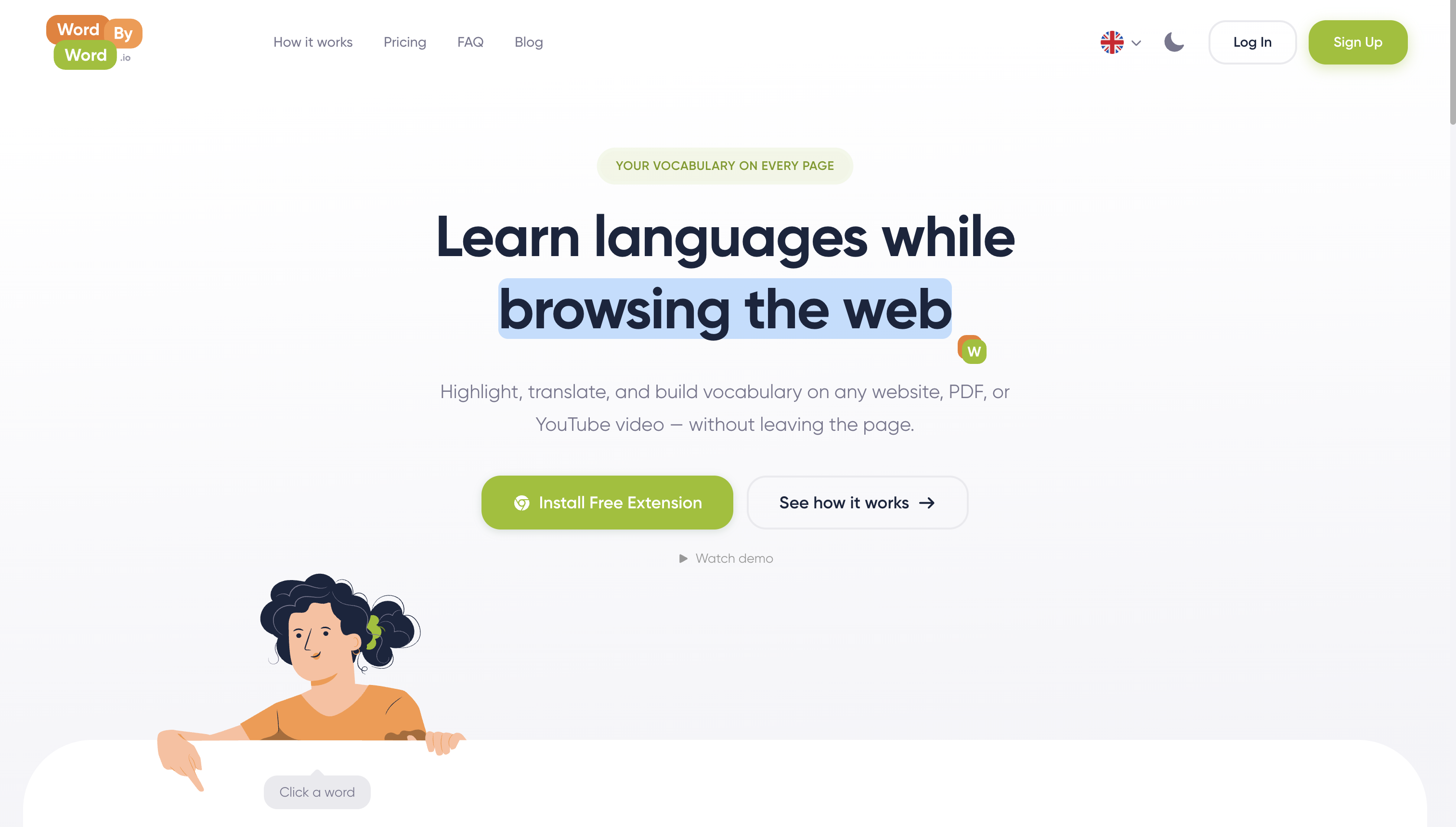
For learners managing two or more languages, that matters. You are not splitting your attention between a study app and the content you actually want to consume. You highlight a word, it gets translated and saved, and WordByWord’s AI handles the rest: scheduling reviews, tracking strength, and surfacing words before you forget them. The Spotlight mode gives you an instant visual read on any page, so you spend time on content that matches your current level rather than grinding through text that is either too easy or too hard.
The free tier covers core translation and vocabulary features. A paid subscription unlocks unlimited collections, AI-powered exercises, and enhanced personalization. Start building your vocabulary today without changing how you browse.
Key Takeaways
Multilingual flashcards work best when AI-driven spaced repetition, strategic language pairing, and consistent daily review replace brute memorization.
| Point | Details |
|---|---|
| FSRS beats older algorithms | FSRS schedules reviews about 30% more efficiently than SM-2, letting you build a larger vocabulary with the same study time. |
| Pair distant languages | Interference is highest between similar languages; pairing unrelated ones keeps vocabulary and grammar separate. |
| Stagger your start times | Spend the first months at an 80/20 split favoring Language A before shifting to 50/50 with Language B. |
| Consistency beats intensity | Daily focused sessions with spaced repetition outperform irregular long study blocks every time. |
| WordByWord for browsing learners | WordByWord builds flashcards automatically from any webpage, PDF, or YouTube video across 50+ languages. |