Bibliothek

Fertige Wortsammlungen mit Übersetzungen und Beispielen. Klone sie und lerne direkt im Browser — auf jeder Website, in YouTube und PDF.


Английская лексика для жизни онлайн: post, feed, like, share, comment, follow, follower, unfollow. Плюс сокращения, которыми заполнены комментарии, и интернет-сленг, которого нет в учебниках.
150 Wörter–
–neu–lernst du–kennst du
French word pairs that say the same thing at different levels of formality: je ne sais pas and je sais pas, nous and on, cela and ça, il faut and faut. Shows which version fits an interview and which does not.
150 Wörter–
–neu–lernst du–kennst du
French vocabulary for journalism: le journaliste, le reporter, le correspondant, l'envoyé spécial, le rédacteur en chef. Covers press and broadcasting formats and the words for attributing a source in a report.
200 Wörter–
–neu–lernst du–kennst du
French vocabulary for finance work: la banque, le compte courant, le compte épargne, le livret A, le relevé de compte. Covers banking and payments, investing and markets, and the terms used in statements and reports.
200 Wörter–
–neu–lernst du–kennst du
French connectors and formal alternatives that lift an essay: ainsi, par conséquent, dès lors, en l'occurrence, en vertu de, à l'instar de. Each marked for how formal it is, so the register stays consistent.
200 Wörter–
–neu–lernst du–kennst du
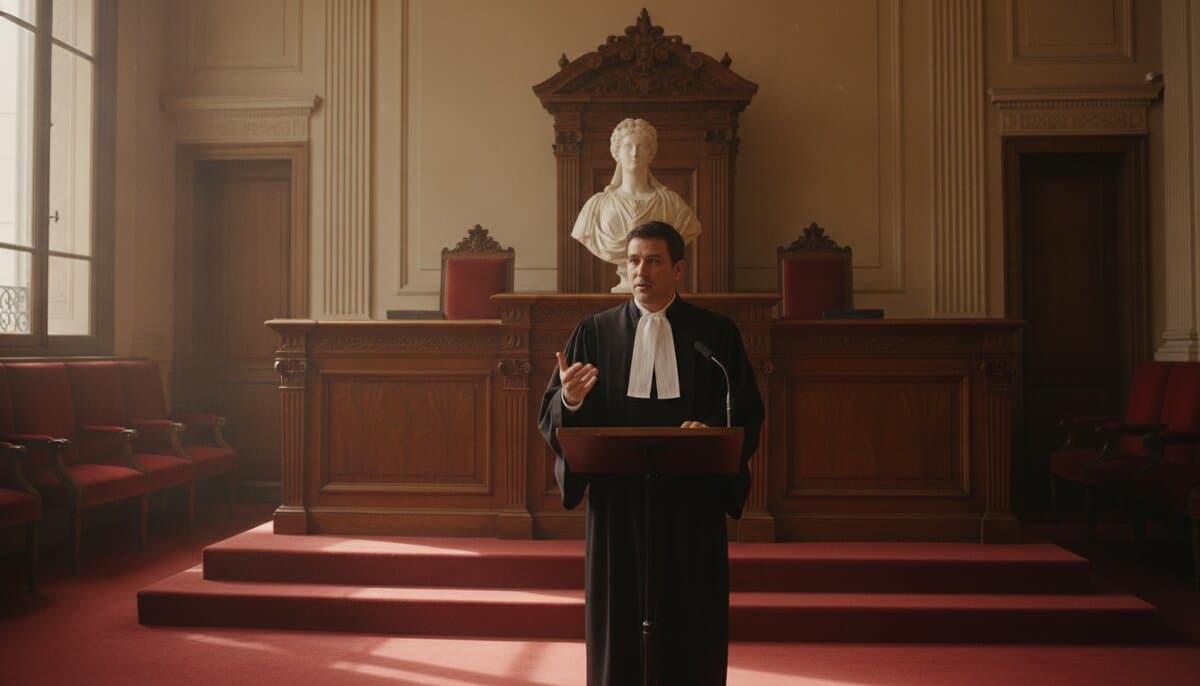
French legal terminology as it appears in practice: le droit, la loi, le Code civil, le Code pénal, la jurisprudence, le décret. Covers court procedure, recurring contract clauses and criminal against civil vocabulary.
200 Wörter–
–neu–lernst du–kennst du
Advanced French vocabulary for the DELF and DALF exams: society, politics, science and culture, plus the essay words examiners expect — l'enjeu, la problématique, le constat, la démarche, le dispositif, la mise en œuvre, le bilan.
500 Wörter–
–neu–lernst du–kennst du
French words that sound almost identical and mean different things: accepter and excepter, affecter and effectuer, allusion and illusion, amener and emmener. Each pair with what separates them and an example of both.
100 Wörter–
–neu–lernst du–kennst du
French for working in hospitality rather than eating out: le serveur, le chef cuisinier, le commis de cuisine, le sommelier, le maître d'hôtel. Plus station names and the phrases used with guests up to the bill.
150 Wörter–
–neu–lernst du–kennst du
French proverbs still used in ordinary conversation: qui vivra verra, mieux vaut tard que jamais, l'habit ne fait pas le moine, petit à petit l'oiseau fait son nid. Each with its meaning and English equivalent.
150 Wörter–
–neu–lernst du–kennst du
French vocabulary for marketing work: le marketing, la publicité, la marque, le produit, le consommateur, la cible. Covers branding and campaigns, digital channels and the metrics that get reported back to a client.
150 Wörter–
–neu–lernst du–kennst du
French linking words sorted by the job they do in a sentence: mais, et, ou, donc, car, or, cependant. Covers cause, consequence, contrast and conclusion, each with an example, since the register varies more than the meaning.
150 Wörter–
–neu–lernst du–kennst du
French IT terminology for working on a francophone team: le logiciel, le matériel, le programme, le système d'exploitation, le serveur, le réseau. Covers programming and code review, databases and infrastructure.
150 Wörter–
–neu–lernst du–kennst du
Medical French for staff treating French-speaking patients: le patient, l'infirmier, le chirurgien, l'anesthésiste, le cardiologue. Covers symptoms, diagnoses and treatments plus the vocabulary for taking a history.
200 Wörter–
–neu–lernst du–kennst du
Word pairs where Quebec and metropolitan French part ways: char and voiture, blonde and petite amie, chum and petit ami, magasiner and faire les courses. Shown side by side with the context each variant belongs to.
150 Wörter–
–neu–lernst du–kennst du
French vocabulary for an ordinary working day: le bureau, l'ordinateur, l'écran, le clavier, la souris, l'imprimante, plus job titles and departments and the phrases for asking a colleague or raising a problem.
150 Wörter–
–neu–lernst du–kennst du
French irregular verbs grouped by conjugation pattern, starting with the ones used constantly — être, avoir, aller, faire, dire, pouvoir, vouloir. Present, past and future forms, each with an example sentence in an ordinary phrase.
200 Wörter–
–neu–lernst du–kennst du
French idioms that make no sense translated literally — avoir le cafard, coûter les yeux de la tête, avoir la pêche, poser un lapin, tomber dans les pommes. Each with its real meaning and the nearest English equivalent.
100 Wörter–
–neu–lernst du–kennst du
French slang as it is actually spoken: le truc, le mec, la meuf, le boulot, la bouffe, bouffer, bosser, kiffer. Each entry says what it means and how informal it sounds, so nothing lands in the wrong company.
150 Wörter–
–neu–lernst du–kennst du
Business French for the situations that matter most: la réunion, le bureau, le projet, l'entreprise, le client, le contrat, le budget. Covers meetings and presentations, negotiating terms and professional correspondence.
150 Wörter–
–neu–lernst du–kennst du
French vocabulary for an ordinary day at home, built around the reflexive verbs a routine actually needs: se réveiller, se lever, se doucher, se brosser les dents, s'habiller. Plus rooms, furniture and household items.
150 Wörter–
–neu–lernst du–kennst du

Feature anfragen

Was sollen wir ergänzen oder reparieren? Wir lesen jede Nachricht und schenken dir etwas für die Idee.

0 / 4000
Bibliothek der Wortsammlungen — Seite 5 | WordByWord.io