

Vocabulary is the set of words a reader knows; comprehension is the process that uses those words, plus inference and background knowledge, to build meaning from a text. Neither substitutes for the other. A reader can recognize every word on a page and still miss the point, or understand the gist of a passage while stumbling over half its vocabulary. The instructional takeaway is simple: teach words directly and give students lots of real reading, at the same time, not in sequence.
TL;DR:
- Teaching vocabulary explicitly, especially Tier 2 words, is essential because they have high utility across various subjects and frequently appear in complex texts.
- Vocabulary knowledge accounts for a significant and consistent part of reading comprehension, with research supporting integrated teaching alongside real reading experiences.
- Building both broad and deep vocabulary is necessary, as recognizing many words superficially does not ensure understanding of their multiple meanings, connotations, or context-based nuances.
- Quick, low-cost assessments like oral probes and retelling exercises can identify vocabulary gaps and comprehension issues early before they hinder overall learning progress.
- Digital tools that highlight unknown words during reading and track vocabulary growth support targeted instruction without replacing the need for varied, real texts.
Table of Contents
- Comprehension vs Vocabulary: Where Each One Does Its Job
- What Research Says About Vocabulary and Comprehension
- Vocabulary Categories and Comprehension Skills Worth Knowing
- How to Build Vocabulary That Actually Improves Comprehension
- Spotting Comprehension and Vocabulary Problems Early
- How an In-Text Vocabulary Tool Maps to These Practices
- An Editorial Take on Balanced Reading Instruction
- Try WordByWord as Your Daily Vocabulary Practice
- Sources
Comprehension vs Vocabulary: Where Each One Does Its Job
Vocabulary supply the raw material comprehension needs to work with. Without knowing what “erosion” or “tyranny” means, a reader has nothing for the comprehension system to process. Comprehension is the assembly line: it takes those known words and combines them with inference, monitoring, and prior knowledge to build a coherent understanding of what a text is actually saying.
Two student profiles show the split clearly. One is a fluent decoder who reads smoothly out loud but has a thin vocabulary. He’ll sound competent and then fail every comprehension question, because he genuinely doesn’t know what several key words mean. The other has a rich oral vocabulary from conversation and being read to, but struggles to decode print quickly enough to use that vocabulary while reading. Same underlying knowledge, opposite bottleneck.
This is also where breadth and depth split apart:
- Breadth is how many words a reader recognizes at all.
- Depth is how well they know each one, including multiple meanings, connotations, and how the word behaves in a sentence.
A student can have broad but shallow vocabulary, recognizing thousands of words at a surface level, yet still misread dense academic text because depth is what handles polysemy, figurative use, and subtle shifts in meaning.
What Research Says About Vocabulary and Comprehension
The relationship between vocabulary knowledge and reading comprehension is moderate to strong across the studies reviewed in a major meta-analysis, with vocabulary knowledge accounting for a meaningful share of the variance in how well readers comprehend text. That is not a marginal effect. It is one of the most consistent findings in reading research, and it’s a big part of why the science-of-reading movement treats vocabulary as a core pillar of comprehension instruction rather than a side activity.
The consensus that has emerged from this research includes a few concrete commitments:
- Vocabulary should be taught explicitly, not left entirely to incidental exposure.
- Wide, varied reading still does the heavy lifting for most vocabulary growth over time.
- Morphology instruction, teaching prefixes, suffixes, and roots, produces measurable gains, with research on adolescent readers showing transfer effects to spelling and some transfer to comprehension itself.
The limit worth flagging: vocabulary-only instruction, drilling word lists in isolation, rarely moves comprehension scores much on its own. Words need context to stick and to transfer.
Vocabulary Categories and Comprehension Skills Worth Knowing
Reading Rockets breaks vocabulary into four functional types: reading vocabulary (words understood in print), listening vocabulary (words understood when heard), speaking vocabulary, and writing vocabulary. A student’s listening vocabulary is almost always the largest of the four, which is exactly why read-alouds above a student’s own reading level still build real vocabulary.
Comprehension breaks down into its own set of subskills, and a weakness in any one of them can look like “bad comprehension” from the outside:
- Decoding: turning print into sound and word identity.
- Fluency: reading accurately enough, and fast enough, that decoding stops eating up working memory.
- Vocabulary: knowing what the decoded words mean.
- Inference: filling gaps the text doesn’t state outright.
- Monitoring: noticing when something doesn’t make sense and going back to fix it.
A single low comprehension score can hide any of these five problems, which is exactly why blanket “read more” advice so often falls flat.
How to Build Vocabulary That Actually Improves Comprehension
Not every unfamiliar word deserves a lesson. Tier 2 words, high-utility academic vocabulary like “analyze,” “evidence,” or “significant,” deserve the bulk of instructional time because they show up across subjects and carry weight in complex text. Tier 1 words (basic, everyday vocabulary) usually don’t need direct teaching, and Tier 3 words (technical, subject-specific terms like “photosynthesis”) are better handled in context, right when the content requires them.
Here’s a practical sequence that works in a classroom or at the kitchen table:
- Pick five to eight Tier 2 words from an upcoming text, chosen for how often students will meet them again.
- Teach each word two ways, with a plain definition and with the word inside a real sentence from the text. Effective vocabulary instruction combines both, since definitions alone rarely stick.
- Read the full text, letting students meet the pre-taught words in context instead of cold.
- Revisit the words two or three more times over the following week through quick recall checks or a vocabulary journal entry.
- Add a short morphology mini-lesson when a word has a useful prefix or root, since that pattern often unlocks several other words at once.
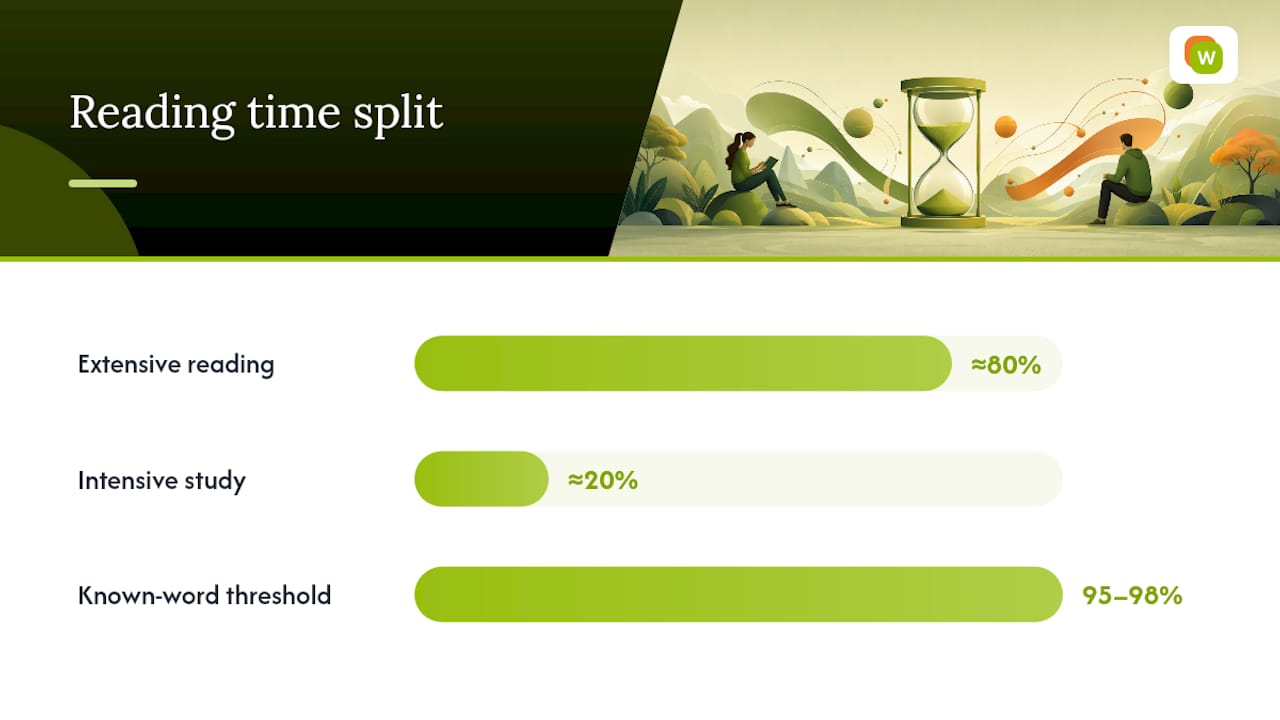
Outside that targeted work, students should spend most of their reading time on wide, easy reading rather than intensive study. A common benchmark suggests roughly an 80/20 split between extensive and intensive reading works well for most learners, with the bulk of time in books and articles they can read with minimal friction, and shorter, denser stretches reserved for close study. A useful gauge for whether a text belongs in the “wide reading” pile: if a reader already knows roughly 95 to 98 percent of the words on the page, it’s suited to independent reading. Below that, it needs pre-teaching or intensive support first. WordByWord’s context-based vocabulary strategies walk through how to structure that pre-teaching step at home or in class.
Pro Tip: Keep a running list of words a student has met three or more times but still can’t define on the spot. Those are the words draining comprehension the most, and they’re usually a shorter list than you’d expect.
Spotting Comprehension and Vocabulary Problems Early
The tell for a vocabulary gap is usually specific: a student can retell the plot of a story but goes blank on a handful of concept words, or substitutes a vague word (“thing,” “stuff”) where a precise term belongs. A comprehension gap looks different: full sentences read correctly, but the retell skips major details, gets the sequence wrong, or misses the point of the passage entirely.
A few low-cost checks catch most of this early:
- A quick oral vocabulary probe: point to five target words from a recent text and ask for a definition or example.
- A cloze or read-aloud retell: have the student summarize a short passage in their own words.
- Simple inference questions that can’t be answered by pointing to text (“Why do you think the character did that?”).
- A words-correct-per-minute fluency check, since monitoring reading rate alongside vocabulary is a recommended practice for catching problems before they compound.
Record scores every two to three weeks for a student receiving targeted support, and keep the same five or six words or passages so scores are actually comparable over time.
How an In-Text Vocabulary Tool Maps to These Practices
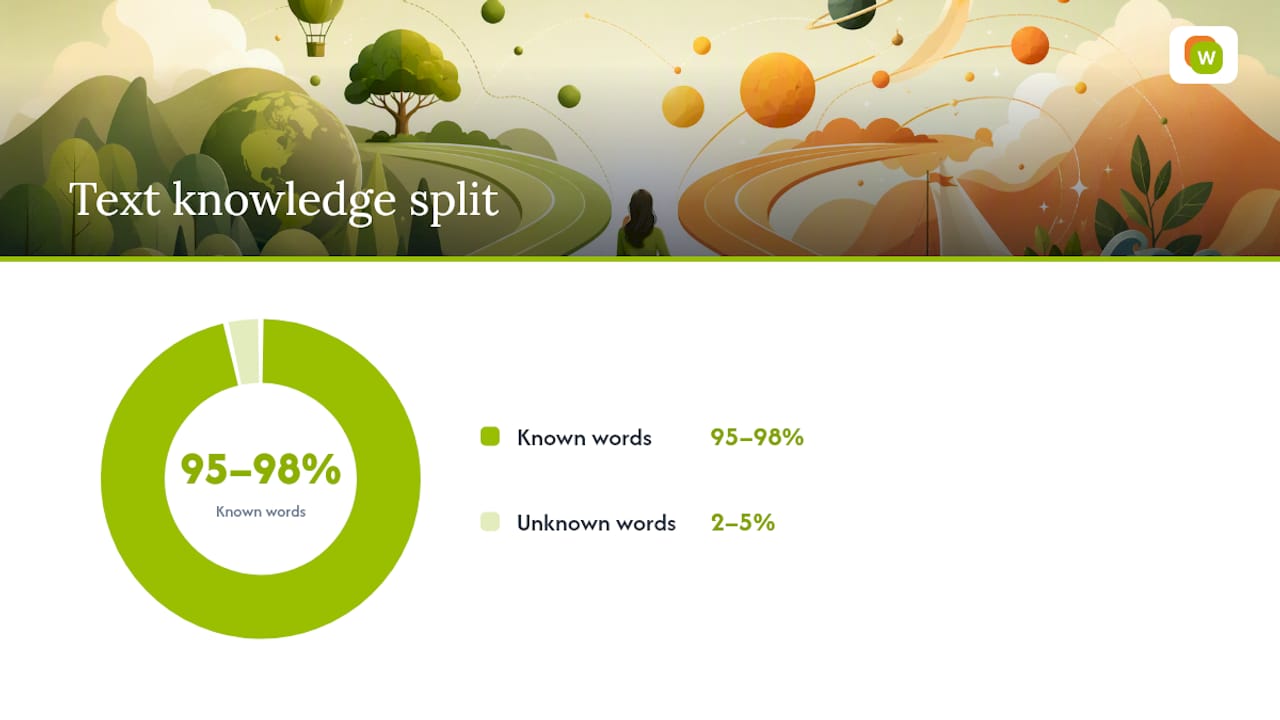
Most of the strategies above hinge on one hard logistical problem: catching the right words at the right moment. WordByWord’s Spotlight mode does that automatically, highlighting unknown words directly on a webpage, PDF, or YouTube video as a student reads, which is targeted exposure without an extra worksheet. The comprehension level feature estimates what share of a text’s words a reader already knows before they start, which solves the 95 to 98 percent text-selection problem without any guesswork.
A few ways this plays out in practice:
- A teacher builds a collection of Tier 2 words before assigning a chapter, so students meet them pre-taught rather than cold.
- A student reading independently taps unfamiliar words as they go, and they land in a collection for spaced review instead of getting forgotten.
- A parent runs a five-minute weekly review using the flashcard modes, catching words that never made it past short-term memory.
Pro Tip: Pilot this with one struggling reader before rolling it out to a full class. The comprehension-level check alone will tell you within a week whether a given book or article is actually within reach.
An Editorial Take on Balanced Reading Instruction
The real work is teaching words explicitly while keeping students in real, varied text, because either one alone caps the other. What we’d push teachers toward is tracking both sides of that equation, not just comprehension scores, since a stalled vocabulary count often explains a comprehension plateau months before a test does. Evidence-based tools that make word tracking automatic earn their place here, but only when they support that habit rather than replace it.
— WordByWord Team
Try WordByWord as Your Daily Vocabulary Practice
WordByWord turns the wide-reading half of this equation into something trackable instead of invisible. It highlights unknown words directly inside the articles, PDFs, and YouTube videos you’re already reading, shows your comprehension level before you commit to a text, and pushes anything you look up into spaced-repetition flashcards so it doesn’t evaporate by next week.
Teachers can build a shared collection of Tier 2 words for a unit; students can use the extension solo during independent reading; parents can run a five-minute review with a child once a week. The free plan works indefinitely with no time limit, just usage caps, so there’s no reason not to test it against a real reading list first. If you want to see how collections work with a specific language, the French vocabulary library shows the format in action. Install the extension and try it on the next article, PDF, or video you were going to read anyway.
Sources
- Basics: Vocabulary | Reading Rockets
- Foundational Skills to Support Reading for Understanding in Kindergarten Through 3rd Grade (IES practice guide)


