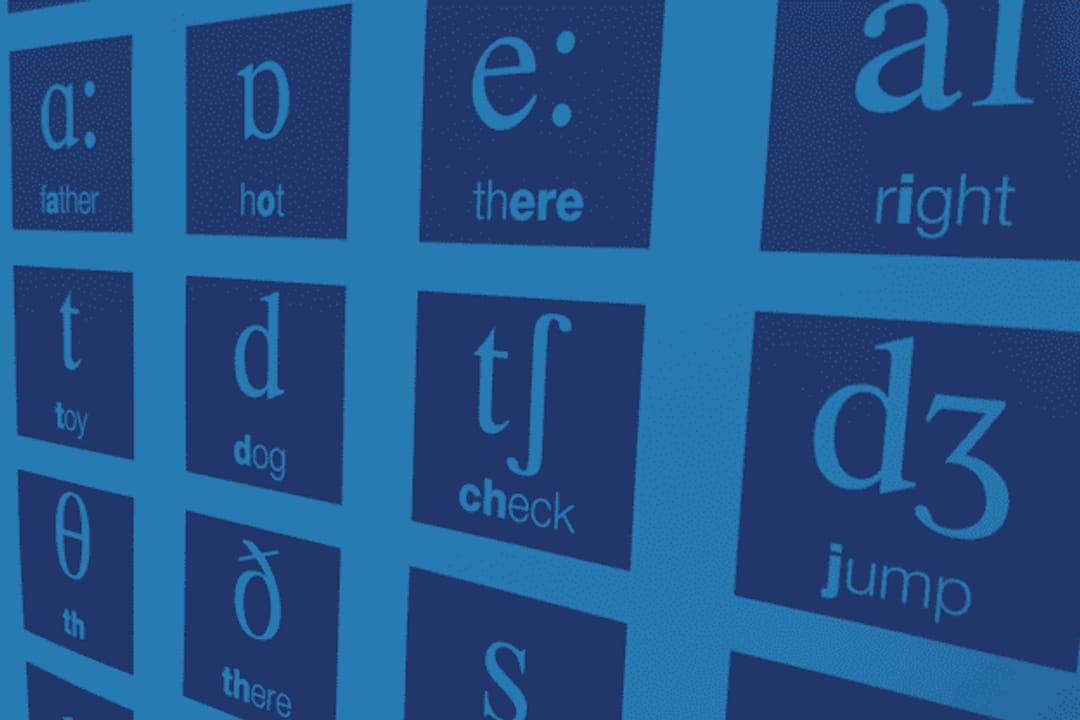
The International Phonetic Alphabet gives every speech sound a unique written symbol, so you always know exactly how a word is pronounced. The word “apple,” for instance, transcribes as /ˈæp.əl/ — the /ˈ/ marks primary stress, /æ/ is the vowel in “cat,” and /ə/ is the unstressed schwa. That one line tells you more than any spelling ever could. If you’re starting from scratch, learn the English consonants first — they map closely to letters you already know — then tackle the vowels, where the real surprises live. The Ipachart lets you click any symbol and hear it immediately, which is the fastest way to connect symbol to sound.
Key Takeaways
The most effective way to learn IPA is to combine symbol recognition with audio practice from day one, then apply that knowledge to real words you’re actively trying to learn.
| Point | Details |
|---|---|
| IPA is a reference tool, not a shortcut | Use it to understand articulation precisely, always paired with listening and speaking practice. |
| Learn consonants before vowels | English consonants map closely to familiar letters; vowels require more ear training. |
| Phonemic vs. phonetic transcription | Slashes / / show contrastive sounds; brackets [ ] show fine articulatory detail. |
| Audio-enabled charts are non-negotiable | Click-to-listen tools like ipachart.app connect symbols to sounds faster than any printed chart. |
| WordByWord for in-context practice | The extension adds audio and spaced review to real content, reinforcing IPA knowledge as you read. |
Table of Contents
What is the IPA and why should you learn it?
The International Phonetic Alphabet is a writing system designed to represent every sound in every human language with a single, unambiguous symbol. One symbol, one sound — always. That consistency is the whole point. English spelling notoriously fails this test: “though,” “through,” “tough,” and “cough” share four letters but produce four completely different vowel sounds. IPA cuts through that chaos.
Three practical reasons learners reach for IPA:
-
Dictionary lookup. Every major English dictionary — Merriam-Webster, Oxford, Cambridge — uses IPA transcriptions. Once you can read them, you never have to guess how a new word sounds.
-
Pronunciation precision. IPA describes exactly where your tongue goes, how your lips move, and whether your vocal cords vibrate. That level of detail is hard to get from audio alone.
-
Cross-dialect reference. The same IPA symbol means the same articulation whether you’re studying General American, British RP, or Australian English, so you can compare accents systematically.
One misconception worth clearing up early: the IPA Handbook frames IPA as a reference tool for mapping speech, not a shortcut to sounding like a native speaker. Knowing that /θ/ is a voiceless dental fricative tells you where to put your tongue; it does not replace the hours of listening and speaking practice that build fluency. Use IPA as a precise map, not a substitute for the territory.
How the IPA chart is organized
The chart splits into two main regions: consonants and vowels. Understanding the logic behind each region makes memorization far less painful.
Consonants: place and manner
Every consonant symbol sits at the intersection of two coordinates. Place of articulation describes where in the mouth the airflow is constricted: bilabial (both lips, as in /p/), labiodental (lip and teeth, as in /f/), dental (tongue and teeth, as in /θ/), alveolar (tongue and the ridge behind your upper teeth, as in /t/), palatal (/j/), velar (back of tongue and soft palate, as in /k/), and glottal (/h/). Manner of articulation describes how the airflow is shaped: plosive (full stop then release), nasal (air through the nose), fricative (turbulent airflow), affricate (stop followed by fricative), approximant (partial constriction), and lateral (air flows around the tongue sides).
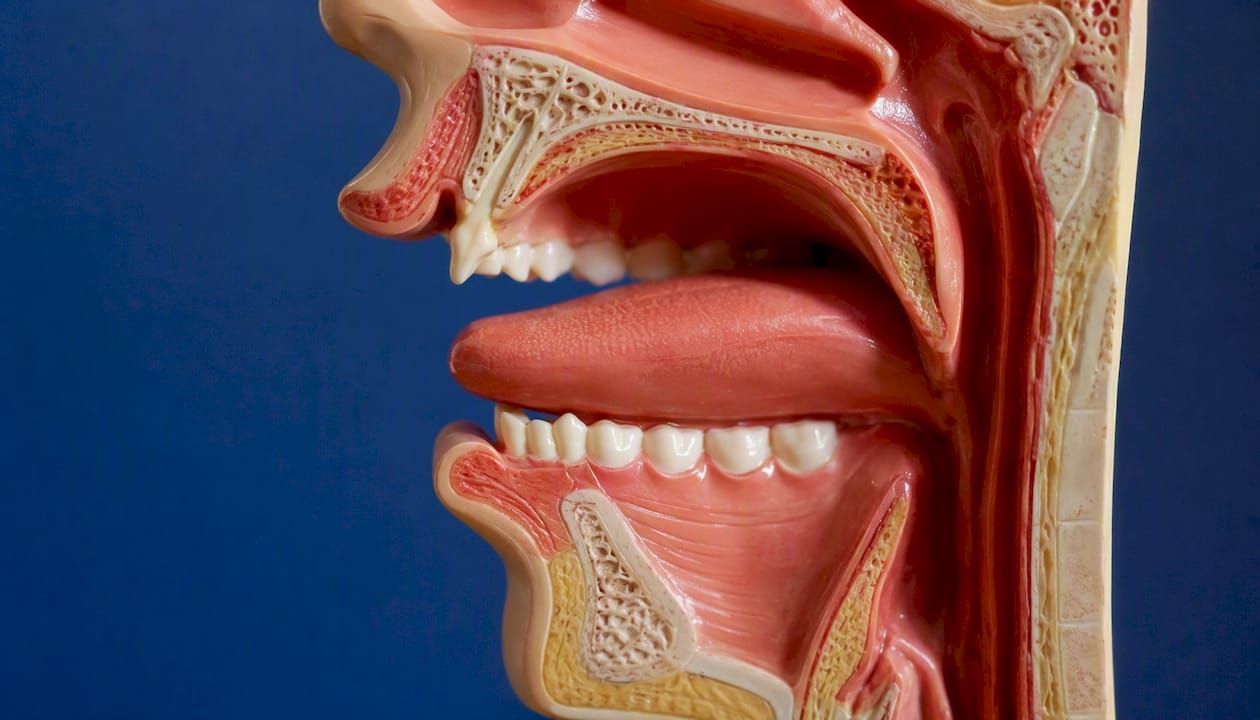
Where two symbols share a cell on the chart, the left one is voiceless (vocal cords apart) and the right one is voiced (vocal cords vibrating). That single rule decodes dozens of pairs: /p/ and /b/, /t/ and /d/, /s/ and /z/.
Vowels: the vowel space map
The vowel chart is a stylized cross-section of the mouth, shaped roughly like a trapezoid. The vertical axis runs from high (tongue near the palate) to low (tongue near the floor of the mouth). The horizontal axis runs from front (tongue pushed forward) to back (tongue pulled back). Lip rounding adds a third dimension: front vowels are usually unrounded, back vowels usually rounded. English /iː/ (as in “see”) sits at the top-left corner — high and front. English /ɑː/ (as in “father”) sits at the bottom-right — low and back.
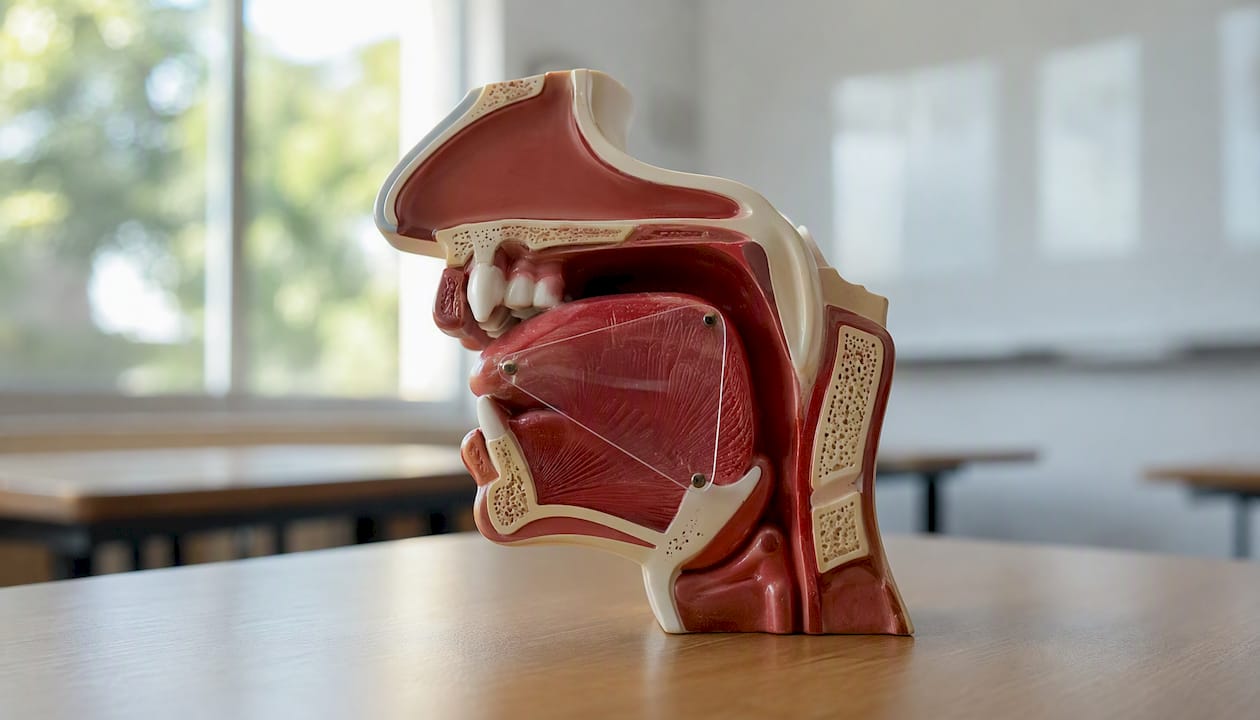
The official IPA chart maintained by the International Phonetic Association is the authoritative reference for this layout, and the full symbol inventory — 107 segmental letters, 31 diacritics, and 17 suprasegmental signs — has remained stable since the 2005/2015 revisions.
| Dimension | Consonants | Vowels |
|---|---|---|
| Primary axis 1 | Place of articulation (bilabial → glottal) | Height (high → low) |
| Primary axis 2 | Manner of articulation (plosive → lateral) | Backness (front → back) |
| Third dimension | Voicing (voiceless / voiced pairs) | Lip rounding (unrounded / rounded) |
| Chart position logic | Left = voiceless, right = voiced in shared cells | Top-left = high-front, bottom-right = low-back |
Pro Tip: To memorize the vowel grid, trace a rough “F” shape: start at /iː/ (top-left), drop to /æ/ (bottom-left), then slide right to /ɑː/ (bottom-right), and climb to /uː/ (top-right). Those four corners anchor the whole English vowel space.
IPA consonants used in English: a practical reference
The consonants below cover the core set you’ll encounter in English dictionary transcriptions. For each, the symbol appears with one or two example words drawn from the Wikipedia Help:IPA/English key and the Vocabulary.com IPA guide. Click any symbol on ipachart.app to hear it before drilling the examples.
-
/p/ — voiceless bilabial plosive: pin, spin
-
/b/ — voiced bilabial plosive: bin, cab
-
/t/ — voiceless alveolar plosive: tin, stop
-
/d/ — voiced alveolar plosive: din, bad
-
/k/ — voiceless velar plosive: cat, skin
-
/ɡ/ — voiced velar plosive: get, bag
-
/tʃ/ — voiceless palato-alveolar affricate: chin, watch
-
/dʒ/ — voiced palato-alveolar affricate: judge, age
-
/f/ — voiceless labiodental fricative: fan, off
-
/v/ — voiced labiodental fricative: van, of
-
/θ/ — voiceless dental fricative: thin, bath
-
/ð/ — voiced dental fricative: this, breathe
-
/s/ — voiceless alveolar fricative: sun, miss
-
/z/ — voiced alveolar fricative: zoo, has
-
/ʃ/ — voiceless palato-alveolar fricative: she, wish
-
/ʒ/ — voiced palato-alveolar fricative: measure, vision
-
/h/ — voiceless glottal fricative: hat, ahead
-
/m/ — bilabial nasal: man, him
-
/n/ — alveolar nasal: no, sun
-
/ŋ/ — velar nasal: sing, think
-
/l/ — alveolar lateral approximant: let, full
-
/r/ — alveolar approximant (General American): red, car
-
/j/ — palatal approximant: yes, few
-
/w/ — labio-velar approximant: wet, queen
Two contrasts trip up learners more than any others. The /θ/ vs /ð/ pair looks nearly identical on paper but differs only in voicing: put your fingers on your throat and say “thin” then “this” — you’ll feel the vibration kick in for /ð/. The /ʃ/ vs /ʒ/ pair is the same voicing contrast applied to the palato-alveolar position: “she” vs the middle consonant in “measure.” Minimal-pair drills on these four symbols alone will sharpen your ear faster than working through the whole chart at once.
IPA vowels and English diphthongs: examples and tips
English has more vowel sounds than most languages, and the IPA captures every one of them. The list below covers the primary monophthongs and the most common diphthongs in General American English.
Monophthongs:
-
/iː/ — “see,” “feet” (high front unrounded; hold it long)
-
/ɪ/ — “sit,” “bit” (slightly lower and more central than /iː/)
-
/e/ or /eɪ/ — “say,” “face” (mid front; often a diphthong in American English)
-
/ɛ/ — “bed,” “set” (mid-low front unrounded)
-
/æ/ — “cat,” “trap” (low front unrounded; the jaw drops noticeably)
-
/ɑː/ — “father,” “palm” (low back unrounded)
-
/ɔː/ — “thought,” “law” (mid-high back rounded)
-
/ʊ/ — “foot,” “put” (high back rounded, but lax — lips less tense than /uː/)
-
/uː/ — “food,” “goose” (high back rounded; lips fully rounded)
-
/ʌ/ — “cup,” “strut” (mid central unrounded)
-
/ə/ — “about,” “sofa” (mid central; the schwa, the most common English vowel)
-
/ɜː/ — “bird,” “nurse” (mid central rounded in RP; rhotic /ɜːr/ in American English)
Common diphthongs:
-
/aɪ/ — “price,” “fly”
-
/aʊ/ — “mouth,” “now”
-
/ɔɪ/ — “choice,” “boy”
-
/oʊ/ — “goat,” “go” (General American)
-
/ɪə/ — “near,” “here” (more common in RP)
-
/eɪ/ — “face,” “day”
The two pairs learners confuse most: /ɪ/ vs /iː/ and /æ/ vs /ɑ/. For /ɪ/ vs /iː/, the difference is both length and muscle tension — /iː/ requires you to actively pull the corners of your mouth back, while /ɪ/ is relaxed. For /æ/ vs /ɑ/, drop your jaw further for /æ/ and push the tongue slightly forward; /ɑ/ sits deeper and further back. The Collins COBUILD IPA guide maps these distinctions to both RP and General American conventions, which is worth checking if you’re targeting a specific accent.
Pro Tip: Record yourself saying a minimal pair — “ship” /ʃɪp/ and “sheep” /ʃiːp/ — then play it back at half speed. If the vowels sound identical, your /ɪ/ is too tense. Relax the jaw and try again.
Diacritics, stress marks, and suprasegmentals
Base symbols carry the core sound; diacritics and suprasegmentals carry everything else. The Kiel 2020 IPA chart PDF documents all 31 diacritics and 17 suprasegmental signs in full detail. Here are the ones you’ll see constantly in English transcriptions:
Diacritics:
-
ʰ (superscript h) — aspiration: /pʰ/ in “pin” (the puff of air after the /p/)
-
˜ (tilde above) — nasalization: /ã/ when a vowel is nasalized
-
̥ (ring below) — devoicing: /n̥/ for a voiceless nasal
-
̬ (wedge below) — voicing: marks a normally voiceless sound as voiced
Suprasegmentals:
-
ˈ (raised vertical stroke before a syllable) — primary stress: /ˈæp.əl/ for “apple”
-
ˌ (lowered vertical stroke) — secondary stress: /ˌɪn.fəˈmeɪ.ʃən/ for “information”
-
ː (triangular colon) — length: /iː/ is the long version of the /i/ vowel
-
. (period) — syllable boundary: /ˈæp.əl/ shows two syllables
Pro Tip: When you first read a transcription, scan for the ˈ mark before anything else. It tells you which syllable carries the beat of the word — and mispronouncing stress is often more disruptive to comprehension than mispronouncing a single consonant.
Tone and intonation markers exist in IPA but rarely appear in English dictionary transcriptions, since English is not a tonal language. You’ll encounter them if you study Mandarin, Thai, or other tonal languages using IPA.
Transcription conventions: / /, [ ], and ⟨ ⟩ explained
Three different bracket types appear in IPA transcriptions, and each signals a different level of precision. Mixing them up is one of the most common errors in linguistics coursework.
| Delimiter | Name | What it represents | Example |
|---|---|---|---|
| / / | Phonemic (broad) | Contrastive sounds only; dialect-neutral | /kæt/ for “cat” |
| [ ] | Phonetic (narrow) | Every articulatory detail, including allophones | [kʰæt] for “cat” (with aspiration) |
| ⟨ ⟩ | Orthographic | The written spelling, not pronunciation | ⟨cat⟩ |
Phonemic transcription inside / / is what you see in dictionaries. It records only the sounds that change meaning — the phonemes. Phonetic transcription inside [ ] goes deeper: it captures the aspiration on /p/ in “pin” ([pʰɪn]) that doesn’t appear in the phonemic version (/pɪn/), the flap /ɾ/ that replaces /t/ in American English “butter” ([ˈbʌɾər]), and other fine-grained details.
For most learners, phonemic transcription is the right starting point. Narrow phonetic transcription is primarily a tool for linguists documenting speech or for advanced learners who want to nail a specific accent’s allophonic patterns. The Collins COBUILD guide notes that dictionary transcription choices reflect specific accent targets — RP for British dictionaries, General American for most US ones — so the same word may transcribe slightly differently depending on the source.
A few additional conventions worth knowing: a period marks a syllable boundary (/ˈæp.əl/), a raised tie bar ‿ marks linking between words in connected speech, and a vertical bar | marks a minor prosodic boundary (a short pause).
Worked transcription examples to practice right now
Reading about IPA and actually transcribing words are two different skills. Work through these eight examples, then try transcribing the words yourself before checking the answer.
-
apple — /ˈæp.əl/ — Primary stress on the first syllable; /æ/ as in “cat,” schwa for the unstressed second syllable.
-
think — /θɪŋk/ — The /θ/ is voiceless dental; /ŋ/ is the velar nasal before the final /k/.
-
read (present tense) — /riːd/ — Long /iː/ vowel; contrast with “read” (past tense) /rɛd/.
-
three — /θriː/ — Cluster /θr/ at the start; many learners substitute /f/ for /θ/ here.
-
bird — /bɜːrd/ (General American) — The rhotic /ɜːr/ is the defining feature; in RP it’s /bɜːd/ without the /r/.
-
boat — /boʊt/ — The diphthong /oʊ/ glides from mid-back to high-back; lips round then relax.
-
measure — /ˈmɛʒ.ər/ — The /ʒ/ in the middle is the voiced palato-alveolar fricative, the same sound as the “s” in “vision.”
-
button — /ˈbʌt.ən/ — In fast American speech, the /t/ often becomes a glottal stop: [ˈbʌʔ.ən].
Practice prompt: Cover the transcription, say the word aloud, write your own IPA version, then uncover and compare. Do three words per session, five days in a row. On day six, record yourself reading the transcriptions aloud and play them back against a native audio source. The gap between what you wrote and what you hear is your next study target.
Common pitfalls in these examples: writing /θ/ as /f/ or /s/ (a very common substitution), forgetting the length mark on /iː/, and placing stress on the wrong syllable. The “read” past/present contrast is worth drilling separately — same spelling, two different phonemic transcriptions.
Where to find official and interactive IPA charts
Not all IPA charts are equal. Some are outdated, some lack audio, and a few contain outright errors. These are the sources worth bookmarking:
-
International Phonetic Association official chart — The primary authority. The IPA has re-issued the chart annually since 2025, though the core symbol set has been stable since the 2005/2015 revisions. Download the PDF directly from here for offline reference.
-
IPA Kiel 2020 PDF — The most recent formally named revision. Covers pulmonic and non-pulmonic consonants, diacritics, suprasegmentals, and tone letters in a single printable sheet.
-
Ipachart — Click any symbol to hear it. The audio examples make this the most useful daily practice tool for learners who need to connect symbol to sound quickly.
-
Wikipedia Help:IPA/English — A diaphonemic key covering both RP and General American with example words for every symbol. Particularly useful for understanding how the same phoneme maps across dialects.
-
Vocabulary.com IPA guide — Learner-friendly tables with audio for American English symbols. Good for a first pass through the vowel set.
When choosing a chart for daily practice, prioritize three features: audio per symbol (not just per word), example words drawn from the accent you’re targeting, and IPA font rendering that displays correctly in your browser. If symbols appear as boxes or question marks, your system is missing an IPA-compatible font. The free font Doulos SIL, available from SIL International, renders the full IPA character set reliably on any platform.
A step-by-step practice routine for learning IPA
Four weeks is enough time to get comfortable with the core English IPA set if you practice consistently. Here’s a routine that builds from recognition to production.
-
Week 1 — Symbol recognition (15 minutes daily). Open the ipachart.app and click through every English consonant symbol, listening to each one twice. Write the symbol, the example word, and one personal association (e.g., “/θ/ = tongue between teeth = ‘think’”). Cover 6–8 symbols per session.
-
Week 2 — Vowels and diphthongs (20 minutes daily). Repeat the same process for vowels. Focus on the four corner vowels first (/iː/, /æ/, /ɑː/, /uː/), then fill in the middle. Use the minimal-pair drill: say “bit” then “beat,” “cat” then “cart,” and record yourself each time.
-
Week 3 — Transcription practice (25 minutes daily). Take 5–10 common words from whatever you’re reading or watching. Write your own phonemic transcription, then check against a dictionary. Track every error in a notebook — patterns in your mistakes reveal which symbols need more attention.
-
Week 4 — Connected speech and stress (30 minutes daily). Choose a short audio clip (30–60 seconds) from a podcast or YouTube video. Transcribe it at the sentence level, marking stress and syllable boundaries. Play it back, compare, and shadow the speaker three times in a row.
Pro Tip: Spaced repetition accelerates symbol retention dramatically. After each session, add any symbol you missed to a flashcard deck and review it the next day, then three days later, then a week later. You’ll spend less total time on the symbols that stick and more on the ones that don’t.
Beyond the four-week block, the most effective ongoing habit is transcribing one new word per day from real content — an article you read, a video you watched. That keeps IPA connected to vocabulary you actually use, rather than abstract drill material.
A note on realistic expectations
IPA takes longer to internalize than most learners expect, and that’s worth saying plainly. In a classroom setting, teachers typically introduce IPA over several weeks, returning to it repeatedly as new vocabulary appears rather than front-loading the whole chart in one session. The progression that works is: recognize (you can identify a symbol when you see it), then transcribe (you can write the symbol for a sound you hear), then produce (you can generate the sound on demand from the symbol alone). Most learners spend two to three months moving through those stages for English, and that’s completely normal.
The temptation is to treat IPA as a one-time lesson — learn the chart, check the box, move on. What actually works is returning to it every time you meet a new word you’re unsure about. Look up the transcription, say it aloud, and connect the symbol to the sound in that specific word. Over time, the chart stops being something you consult and starts being something you read fluently.
WordByWord makes IPA practice part of your reading routine
Learning IPA in isolation is one thing. Applying it to real content — the articles, videos, and documents you already read — is where the knowledge actually sticks.
WordByWord is a browser extension and web app that works inside the content you already consume. When you encounter an unfamiliar word on any webpage, in a PDF, or in YouTube subtitles, you translate it in one click and save it to a vocabulary collection. The voiceover feature plays audio for saved words, so you hear the pronunciation alongside the IPA transcription you’ve been studying. Spotlight mode highlights words by how well you know them directly on the page, so you can see at a glance which vocabulary still needs work. Spaced repetition then schedules those words for review before you forget them. For learners building IPA skills alongside real vocabulary, that combination of in-context audio and structured review is a natural complement to the pronunciation apps and interactive charts this guide covers. The free plan is free indefinitely. Start at Wordbyword and install the extension today.
Sources
A note on IPA fonts: If symbols display as boxes in your browser or PDF viewer, install Doulos SIL or Gentium Plus, both available free from SIL International. These fonts cover the full Unicode IPA range and render correctly on Windows, macOS, and Linux without additional configuration.