

The fastest way to highlight known words is to use an in-page familiarity highlighter paired with a personal known-word list, so unfamiliar terms visually stand out and known ones fade into the background. This works through browser extensions, click-to-mark workflows, paste-in checkers for offline text, or lightweight scripts. Once words are flagged, exporting them to a spaced-repetition deck turns simple noticing into lasting vocabulary gains.
TL;DR:
- Using an in-page highlighter with a personalized known-word list helps identify unfamiliar terms quickly and efficiently during reading sessions.
- Extensions should recognize inflected forms, support PDF and subtitle highlighting, and include accessibility features like color contrast and keyboard navigation.
- For PDFs and offline texts, extract, compare, and export unfamiliar words into spaced-repetition systems to reinforce vocabulary over time.
- Aim for a lexical coverage of about 95% for comfortable reading, prioritizing words that block understanding and common collocations over obscure vocabulary.
- Start small by importing existing vocabulary lists, test your chosen tools on real texts, and review flagged words daily using flashcards or practice decks.
Table of Contents
- Four quick methods you can use today
- What to look for in browser extensions and in-page highlighters
- Text and file workflows for PDFs, ebooks, and pasted text
- Choosing which words to mark and turning noticing into learning
- Setting up your highlighting workflow step by step
- The research behind highlighting, and how WordByWord applies it
- What learners actually change when they try this
- Try WordByWord to put this into practice
- Sources
- FAQ
Four quick methods you can use today
Different reading situations call for different tools. Here are the four approaches worth trying, roughly in order of setup speed.
- Extension-based highlighting: A browser extension marks words by familiarity level directly on the page, offers one-click definitions, and lets you tag a word as known so it stops standing out.
- Click-to-mark reading: You click unfamiliar words as you read, building your known-word list gradually without any upfront setup.
- Paste-in checkers: You paste a block of text into a tool that compares it against your known-word list and returns the words you have not yet learned, useful for offline or academic text.
- No-install scripts: A short user script or browser bookmarklet applies simple CSS rules to flag words absent from a stored list, appealing to learners comfortable with light code.
Extensions and click-to-mark workflows suit daily browsing. Paste-in tools and scripts fit learners working with static documents or who prefer not to install anything.
What to look for in browser extensions and in-page highlighters
Not all highlighters behave the same way, and the differences matter once you use one daily. A few features separate a genuinely useful tool from a gimmick.
- Inflection-aware matching: The tool should recognize that marking “run” as known also covers “running” and “ran,” not just the exact form you clicked.
- A personal known-word list: Your highlighting should reflect your own vocabulary, not a generic frequency list shared by every user.
- One-click definitions: You should be able to check a word’s meaning without leaving the page or breaking your reading flow.
- PDF and subtitle support: The same highlighting logic should extend to PDFs and video subtitles, since a lot of real reading happens there.
Accessibility matters too. Check whether the tool relies on color alone (a problem for colorblind readers), whether it supports keyboard navigation, and whether highlighting can be toggled off when it becomes distracting.
Common shortcomings to watch for include highlighters that treat every inflected form as a new word, tools with no subtitle or PDF coverage, and designs that use color as the only signal with no underline or icon as backup.

Pro Tip: Test a highlighter on a short article before committing. If it flags words you already know because of a missing inflection, that friction will only grow as your vocabulary does.
Text and file workflows for PDFs, ebooks, and pasted text
Web reading is easy to instrument, but PDFs, ebooks, and printed material need a different approach.
- Extract the text. Copy text from a PDF or ebook reader, or use a PDF-specific highlighting tool that overlays familiarity marks directly on the document, as described in this guide to highlighting words in a PDF.
- Compare against your known-word list. Paste the extracted text into a checker that performs a straightforward set comparison: every word in the text minus every word you already know equals your unfamiliar list.
- Export the results. Send the unfamiliar words to a CSV file or directly into Anki or Quizlet so they enter a review cycle instead of sitting in a static list.
- For coders: a simple script that tokenizes the text, normalizes case and punctuation, and subtracts your known-word set will do the same job as a paid tool, though it will not handle inflections automatically unless you add a lemmatizer.
The mechanics are the same whether you are reading a novel, a research paper, or subtitles: tokenize, compare, export.
Choosing which words to mark and turning noticing into learning
Highlighting only helps if you highlight the right words and follow through with review. Lexical coverage research offers a useful starting point: a lexical coverage target around the mid-90 percentiles is generally treated as the threshold for minimally acceptable comprehension, while a near-98 percent target is considered better for dense or academic material, according to research on lexical coverage and reading comprehension. That same research on lexical coverage and reading comprehension found that coverage explained a measurable share of the variation in comprehension scores across study conditions, though each added percentage point brings a smaller return. Use these thresholds to pick texts, not just to judge them after the fact.
Not every rare word deserves a highlight. Prioritize meaning-blocking vocabulary and useful collocations over obscure one-off terms, a distinction covered in more detail in this piece on comprehension versus vocabulary.
- Mark words that block understanding of the sentence, not every word you have simply never seen before.
- Favor common collocations over isolated rare words, since they generalize better to future reading.
- Export flagged words into a practice deck the same day you notice them.
- Avoid color-only cues: pair color with an underline or icon so meaning is not lost for colorblind readers.
The workflow that works: notice the word while reading, mark it, export it, then review it through spaced repetition in short daily sessions rather than long occasional ones.
Setting up your highlighting workflow step by step
Getting started takes less time than most learners expect.
- Build or import a known-word list. Start empty, or import from Anki, Quizlet, or a spreadsheet if you already track vocabulary.
- Pick your tool. Install a browser extension for daily reading, or choose a paste-in checker if you mostly work with static documents; enable PDF or subtitle support if you need it.
- Tune the highlighting. Decide whether you want known words muted or unknown words emphasized, and test the setting on a real article before locking it in.
- Export and review. Send unfamiliar words to flashcards and commit to a short daily session, 10 to 15 minutes is enough, using spaced repetition rather than cramming.
Pro Tip: Run your first test on an article you would read anyway. A workflow that only works on curated sample text rarely survives contact with real reading habits.
The research behind highlighting, and how WordByWord applies it
Interactive highlighting, where a word is flagged through a click or a gaze trigger rather than pre-marked by an instructor, has a measurable track record. Controlled classroom studies report a large effect on vocabulary learning (d = 1.14) in single sessions, and an effect of d = 1.60 on standardized reading comprehension when the method is used across a longer program, according to research on interactive highlighting. Separate work on collocation learning and cognitive ability found that interactive highlighting can reduce the disadvantage lower-aptitude learners otherwise face, making it a useful scaffold rather than a tool for advanced learners only. On the detection side, a 2025 system combining gaze data with language-model features reached 97.6% accuracy and a 71.1% F1-score for spotting unknown words, according to EyeLingo, a sign that automatic, zero-setup highlighting is becoming more reliable.
Interactive highlighting reduces the role of individual aptitude in learning new collocations.
WordByWord builds on these ideas directly:
- Spotlight mode highlights words on the page by familiarity, from unknown to mastered, so the highlights fade as vocabulary grows.
- Comprehension level shows what share of a text’s words a user already knows before reading, applying coverage thinking to any article, PDF, or video.
- PDF and YouTube subtitle support extend the same highlighting across formats.
- Collections and CSV import or export connect flagged words directly to spaced-repetition practice.
WordByWord Team
What learners actually change when they try this
Small daily habits beat occasional deep sessions. Noticing plus scheduled review tends to show gains within a few weeks; mastering high-frequency vocabulary takes longer. Worth testing: color versus underline cues, or proactive versus interactive highlighting, to see which keeps you engaged.
— WordByWord Team
Try WordByWord to put this into practice
WordByWord turns the methods above into one workflow: a browser extension and web app where Spotlight mode highlights vocabulary by familiarity on any page, PDF, or YouTube video, and the comprehension level tells you before you start whether a text fits your level.
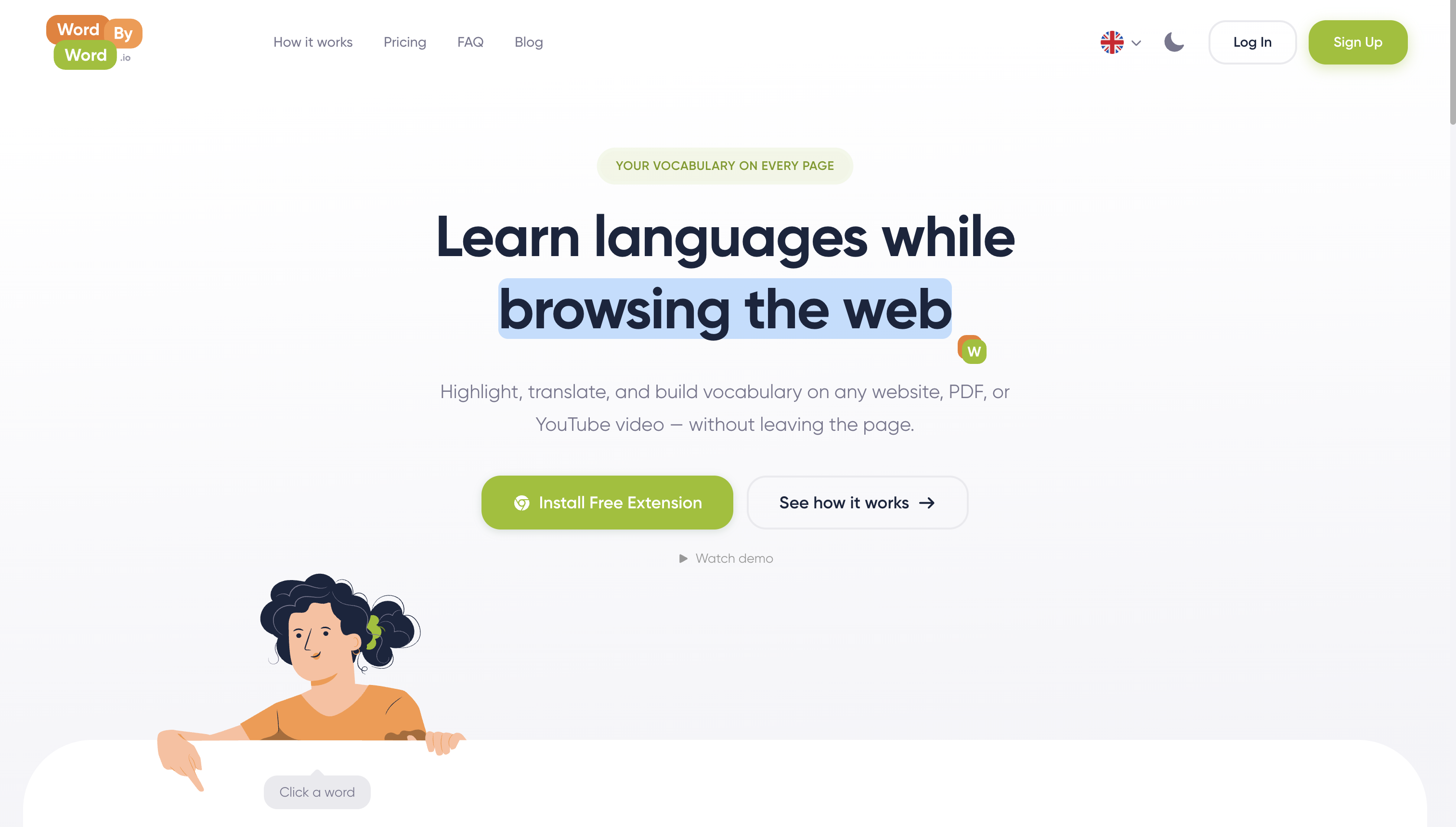
Install the free extension, import a known-word list or start empty, toggle Spotlight to see unfamiliar words stand out, then export them into the vocabulary trainer for spaced-repetition review. The Free Forever plan covers the basics with usage limits, and Premium removes them; current prices are available at Wordbyword.
Sources
- Lexical coverage and reading comprehension revisited
- Interactive highlighting for just-in-time formative assessment during whole-class instruction: effects on vocabulary learning and reading comprehension
- EyeLingo: gaze- and transformer-based unknown-word detection
- The role of learners’ cognitive abilities in L2 collocation learning from proactively or interactively enhanced textual input
FAQ
Is there a way to highlight certain words automatically?
Yes, browser extensions and paste-in checkers can compare text against a personal known-word list and highlight the words missing from it. Some tools, including WordByWord’s Spotlight mode, also shade words by how well you know them, so highlighting fades as your vocabulary grows.
What counts as a good known-word list for highlighting?
A good list reflects the words you personally recognize, built by importing from Anki, Quizlet, or a spreadsheet, or by starting empty and adding words as you read. Coverage research suggests analyzing multiple short samples rather than one passage, since estimates from a single sample are less stable, according to research on text coverage sampling.
What is a better word for highlight in this context?
Common alternatives include “flag,” “mark,” or “tag” as known or unknown, depending on the tool. The underlying action is the same: visually distinguishing recognized vocabulary from words that still need attention.
How much vocabulary coverage do I need to read comfortably?
Around 95% coverage is treated as the threshold for minimally acceptable comprehension, and 98% as a better target for dense or academic text, according to research on lexical coverage. Checking a text’s coverage before committing to it, a method covered in this guide to vocabulary coverage, helps you pick material that matches your level.
What are 10 powerful words worth prioritizing when marking vocabulary?
There is no fixed canonical list, since “powerful” depends on the text and reader, but the general advice from vocabulary research is to prioritize meaning-blocking words and high-frequency collocations over rare, low-utility terms. Focusing on words that recur across different texts tends to speed up comprehension gains more than marking every unfamiliar word you encounter.


