1000 Most Common French Words — Build Your Core Vocabulary
The French words that appear most often in ordinary speech and writing, starting with the verbs everything is built on — être, avoir, faire, dire, pouvoir, aller, voir, savoir. Each with a translation and a sentence showing its use.
A1A2
1.000 Wörter–
–neu–lernst du–kennst du
Melde dich an, um deinen Fortschritt zu dieser Sammlung zu sehen
Begriff (100)
Bedeutung
êtreJe veux être médecin un jour
to be
avoirJ'ai deux frères et une sœur
to have
faireJe vais faire le dîner ce soir
to do / to make
direJe ne sais pas quoi dire
to say / to tell
pouvoirJe ne peux pas venir demain
to be able to / can
allerNous allons au parc ensemble
to go
voirJe vais voir un film ce soir
to see
savoirJe ne sais pas la réponse
to know
vouloirJe veux apprendre le français
to want
venirElle vient chez moi demain
to come
devoirJe dois partir maintenant
to have to / must
prendrePrends ton manteau il fait froid
to take
trouverJe ne trouve pas mes clés
to find
donnerDonne-moi un peu d'eau s'il te plaît
to give
parlerIl parle trois langues couramment
to speak / to talk
aimerJ'aime beaucoup le chocolat
to love / to like
penserJe pense que c'est une bonne idée
to think
mettreMets tes chaussures nous partons bientôt
to put / to place
demanderIl demande toujours des conseils
to ask
laisserLaisse-moi tranquille un moment
to leave / to let
passerJ'ai passé un bon moment hier
to pass / to spend time
croireJe crois que tu as raison
to believe
semblerIl semble fatigué aujourd'hui
to seem
montrerMontre-moi ton nouveau téléphone
to show
resterJe vais rester ici ce soir
to stay / to remain
tenirTiens mon sac une minute s'il te plaît
to hold / to keep
porterElle porte une belle robe rouge
to carry / to wear
regarderJe regarde la télé le soir
to look / to watch
suivreSuis-moi je connais le chemin
to follow
écrireJ'écris une lettre à ma mère
to write
commencerLe cours commence à neuf heures
to begin / to start
comprendreJe ne comprends pas cette phrase
to understand
sentirJe sens une odeur de pain frais
to feel / to smell
attendreAttends-moi devant la gare
to wait
sortirNous sortons ce soir avec des amis
to go out / to leave
entrerEntrez c'est ouvert
to enter
arriverLe train arrive dans dix minutes
to arrive
vivreNous vivons dans une grande ville
to live
partirIl part en vacances la semaine prochaine
to leave / to depart
perdreJ'ai perdu mon portefeuille hier
to lose
jouerLes enfants jouent dans le jardin
to play
entendreJ'entends de la musique dehors
to hear
chercherJe cherche un bon restaurant
to look for / to search
tomberIl est tombé dans l'escalier
to fall
appelerAppelle-moi quand tu arrives
to call
lireJ'aime lire avant de dormir
to read
finirJ'ai fini mon travail pour aujourd'hui
to finish
répondreIl a répondu à ma question
to answer / to reply
connaîtreJe connais bien cette ville
to know [someone/something]
ouvrirOuvre la fenêtre il fait chaud
to open
fermerFerme la porte s'il te plaît
to close
mangerNous mangeons à midi ensemble
to eat
boireJe bois du café le matin
to drink
dormirJe dors huit heures par nuit
to sleep
courirIl court tous les matins au parc
to run
marcherJe marche jusqu'au travail chaque jour
to walk
acheterJ'achète du pain à la boulangerie
to buy
vendreIl vend des fruits au marché
to sell
payerTu peux payer par carte ici
to pay
travaillerJe travaille dans un bureau
to work
apprendreJ'apprends le français depuis un an
to learn
changerIl a changé d'avis au dernier moment
to change
essayerEssaie cette robe elle est jolie
to try
aiderPeux-tu m'aider avec cet exercice?
to help
expliquerLe professeur explique bien la leçon
to explain
rappelerRappelle-moi de prendre mon médicament
to remind / to call back
envoyerJ'envoie un message à mon ami
to send
recevoirJ'ai reçu un colis ce matin
to receive
compterL'enfant sait compter jusqu'à vingt
to count
rencontrerJ'ai rencontré un vieil ami hier
to meet
servirLe serveur sert le repas rapidement
to serve
choisirC'est difficile de choisir un dessert
to choose
offrirJe lui offre un cadeau d'anniversaire
to offer / to give [a gift]
conduireMon père conduit tous les jours
to drive
arrêterArrête de faire du bruit s'il te plaît
to stop
oublierJ'ai oublié mon parapluie au bureau
to forget
déciderNous avons décidé de partir demain
to decide
utiliserJ'utilise mon téléphone pour la musique
to use
poserIl pose toujours de bonnes questions
to put down / to ask [a question]
tournerTourne à gauche au prochain carrefour
to turn
monterMonte les escaliers doucement
to go up / to climb
descendreDescends les escaliers prudemment
to go down / to descend
retournerJe retourne au bureau après le déjeuner
to return / to go back
continuerContinue tout droit pendant deux minutes
to continue
remplirRemplis le formulaire avec tes informations
French vocabulary for music: la musique, la chanson, le chanteur, le groupe, le concert, la guitare, le piano, la batterie. Covers genres and instruments plus everything around a live show, tickets to encore.
French vocabulary for getting around by road: la voiture, le conducteur, le moteur, le pneu, la roue, le volant, le frein. Plus road signs and traffic rules and the phrases for a petrol station or rental desk.
French vocabulary for everyday technology: le smartphone, l'ordinateur portable, la tablette, le chargeur, la batterie, l'écran, le clavier. Plus apps and accounts and the words for a fault or a setting.
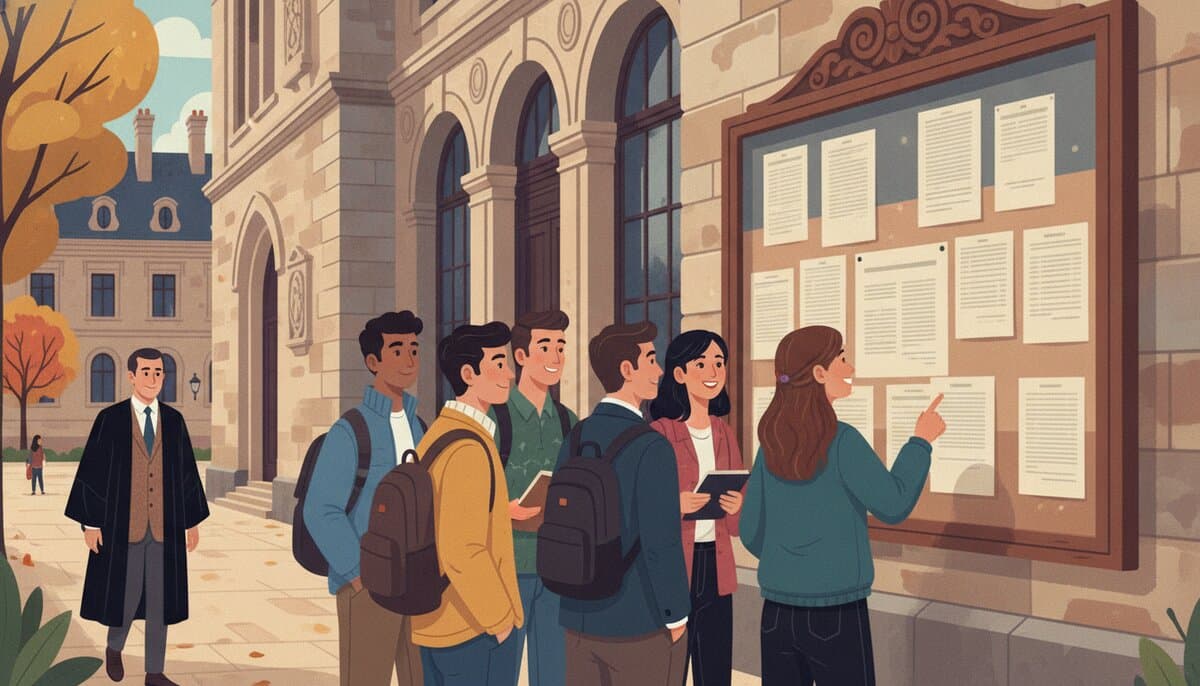
French academic vocabulary for studying at a French university: université, étudiant, professeur, cours, campus, semestre, diplôme, bourse. Covers lectures and essays plus enrolment, deadlines and campus admin.
French vocabulary for looking after an animal: l'animal de compagnie, le chiot, le hamster, le perroquet, la tortue, le cochon d'Inde. Plus feeding, grooming and describing a symptom at the vet.
French vocabulary for celebrations: le mariage, l'anniversaire, la fête, la célébration, le jour férié, le cadeau, l'invitation. Plus everyone involved in a wedding and the toasts that are expected.
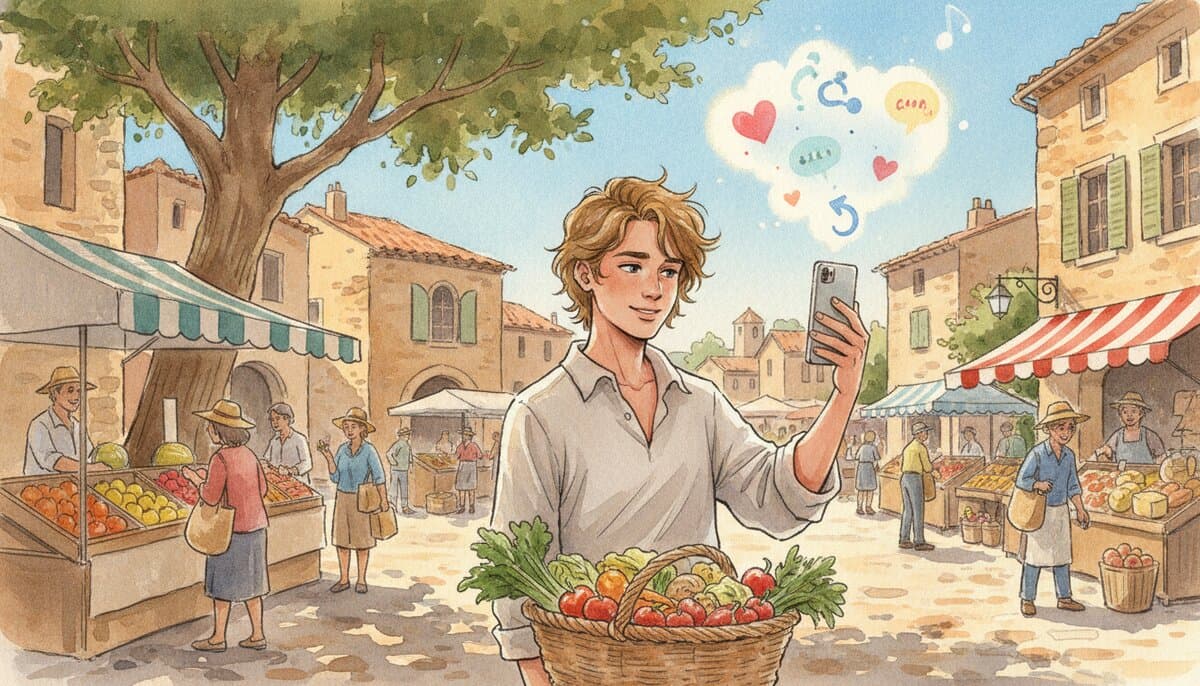
French vocabulary for life online: publier, fil d'actualité, aimer, partager, commentaire, s'abonner, abonné. Plus the abbreviations filling comment threads and the internet slang no textbook covers.
French vocabulary for crime and public safety: le crime, la police, le policier, l'enquêteur, le suspect, la victime, le témoin. Covers news coverage, the legal terms behind it and reporting an incident.
French vocabulary for building and renovating: la rénovation, la construction, la réparation, l'entrepreneur, le maçon, l'architecte. Covers tools and materials and explaining a job to a contractor.
French vocabulary for environmental topics: le changement climatique, le réchauffement climatique, l'environnement, la pollution, la durabilité. Covers recycling, renewable energy and the terms used in the news.
French vocabulary for finding somewhere to live: loyer, locataire, propriétaire, bail, caution, studio, meublé. Covers reading a listing, understanding a lease and the paperwork a French landlord expects.
French phrases for the phone, where there is no body language to help: puis-je parler à…?, c'est de la part de qui?, j'appelle au sujet de ma commande. Covers messages, transfers and customer service calls.
100 Wörter–
–neu–lernst du–kennst du

In meine Sammlungen kopieren
Du bekommst deine eigene Kopie; das Original bleibt in der Bibliothek.